A fighter survives battles… ➤ but a warrior rises from within.
✤ The real warrior is the one who falls, breaks, bleeds—yet still chooses light over darkness, hope over fear, and truth over ego. ᯓ Their greatest victory is not over the world, but over their own mind.
🌍 The environment is changing rapidly due to human-driven factors like industrialization, deforestation, pollution, and climate change. Protecting it requires collective action—through sustainable living, renewable energy, conservation, and awareness.
✦ Changing Environment and Our Responsibility
Forest site images at Hojai
🌍 How the Environment is Changing ?
Rising global temperatures due to greenhouse gas emissions.
Deforestation leading to biodiversity loss and soil erosion.
Air, water, and soil pollution affecting human health and ecosystems.
Urbanization and industrialization increasing waste and resource depletion.
Climate change impacts such as floods, droughts, and unpredictable weather patterns.
⚠️ Major Factors Responsible
Population growth and overconsumption of resources.
Industrial emissions and fossil fuel dependency.
Unsustainable agriculture and landfills.
Plastic pollution and poor waste management.
Unrestricted development damaging natural habitats.
🌿 What We Can Do to Protect the Environment
Adopt renewable energy (solar, wind, hydro) to reduce carbon footprint.
Plant trees and support afforestation projects.
Reduce, reuse, recycle to minimize waste.
Promote sustainable agriculture and organic farming.
Conserve water and energy in daily life.
Raise awareness through education and community initiatives.
Support eco-friendly policies and hold industries accountable.
That evening was painted in peace. As I returned from Srimanta Sankardev Nagar toward Hojai, I noticed an elderly man—perhaps in his late fifties—resting quietly under a sprawling banyan tree. Before him lay a vast paddy field, glowing gold under the evening sun. The air was still, carrying the earthy scent of freshly turned soil — a reminder that life begins here, in the hands of those who nurture the earth.
➤ I stopped my car and walked closer. “Kaka, how are you?” He smiled softly. “I’m fine, just watching my field. You?” I said gently, “Call me ‘tumi’, it feels warmer.” And so began a conversation—short in words, long in emotion.
✬ He pointed toward the field. “This is my land. I’ve tilled it myself this year, but I’m not sure I’ll be able to next year. My sons work in Bengaluru, my daughter is married away. They come sometimes, help a little, but I don’t know if they’ll ever take this soil in their hands again.”
His voice faded into the wind. For a while, neither of us spoke. I could only feel the weight of his question—
➔ “Will there be anyone left, who will still touch this soil with love?”
Those words echoed within me. Because beyond that question lies a truth we often overlook: the farmer’s hands are the roots of our civilization, and our future depends on the soil he protects.
In a world obsessed with progress, we forget that every breath we take, every meal we eat, begins with a farmer and the environment he preserves. When the earth suffers, we suffer too.
The real heroes are not always in uniforms or offices — sometimes, they stand barefoot in muddy fields, sowing hope grain by grain.
★ As individuals, we can honor them not just with words, but with actions:
Support local farmers and organic produce.
Avoid food waste — it disrespects the labor of those who grow it.
Plant trees, protect water, and choose sustainability in small ways.
Teach children that progress is not leaving the land, but loving it responsibly.
✬ Protecting the environment is not a choice — it’s gratitude in action. Because when we protect the farmer, we protect the earth… and when we protect the earth, we protect ourselves.
Do you believe the next generation will carry this love for the soil forward?
Ashish Chakraborty।। MSW ,MA(Double)।। Digital Content Writter ✒️।। Voluntary Social Worker ।। ✍
Image taken from Social Media (create real Source)
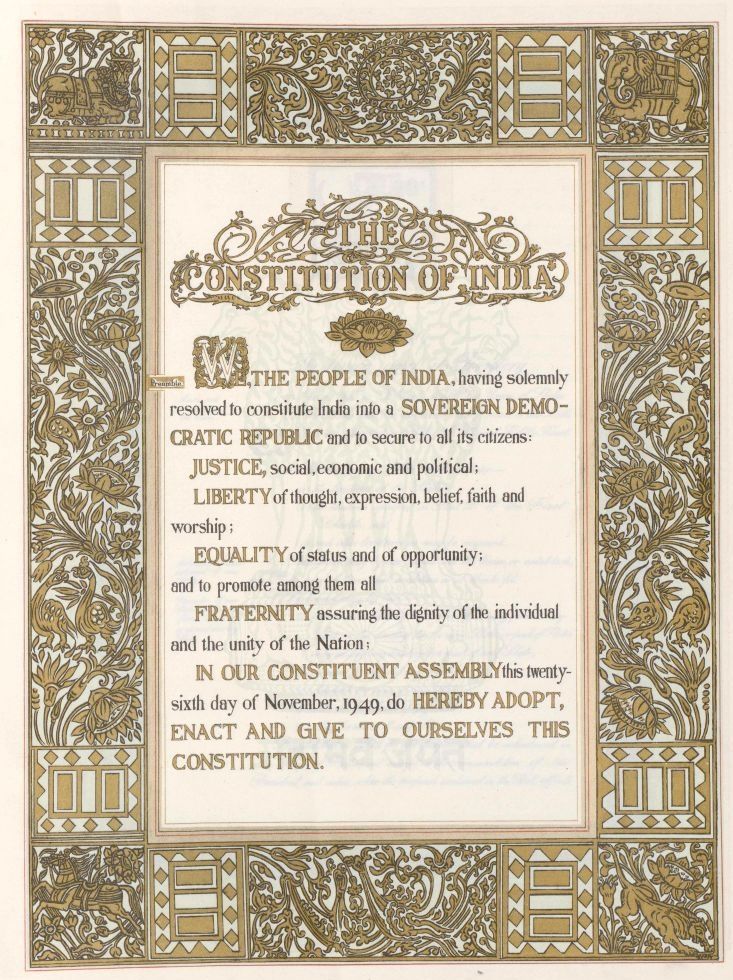
Abstract: The Constitution of India, adopted on 26th January 1950, is the supreme law of the land. It not only provides the framework for political governance but also guarantees fundamental rights, defines the powers of the legislature, executive, and judiciary, and establishes principles for social and economic justice. This article examines the nature, features, and scope of the Indian Constitution and explores its role in shaping modern Indian democracy.
1. Introduction Constitutional law forms the backbone of any democratic polity. In India, the Constitution is both a legal document and a social charter, reflecting the aspirations of a diverse nation. It is designed to provide stability, protect fundamental rights, and ensure the separation of powers among various organs of the state. Understanding its nature and scope is critical for scholars, lawmakers, and citizens alike.
2. Nature of the Indian Constitution The Indian Constitution embodies a unique synthesis of various constitutional traditions, making it distinct in its nature. Some key aspects include:
Written Constitution: Unlike the United Kingdom, India possesses a comprehensive written Constitution, which clearly enumerates the structure, functions, and powers of government institutions.
Federal Features with Unitary Bias: India exhibits a quasi-federal structure, with distribution of powers between the Centre and States, but with a clear unitary bias in times of emergency.
Rigid and Flexible: Certain provisions require a special procedure for amendment, reflecting rigidity, while others can be modified by ordinary legislative procedure, reflecting flexibility.
Sovereign and Democratic: The Constitution upholds India as a sovereign, secular, and democratic republic, guaranteeing equality and justice for all citizens.
Dynamic and Living Document: Judicial interpretations, constitutional amendments, and socio-political developments continually shape the Constitution, ensuring it remains relevant in changing times.
3. Scope of the Indian Constitution The scope of the Constitution extends beyond mere governance. It encompasses multiple dimensions:
Fundamental Rights: Protect individual liberties and prevent state overreach.
Directive Principles of State Policy: Guide the government in promoting social welfare, economic justice, and equity.
Separation of Powers: Ensures an independent judiciary, responsible executive, and accountable legislature.
Federal Relations: Regulates the relationship between the Centre and States, providing mechanisms for conflict resolution.
Amendments and Adaptability: The Constitution allows for amendments, ensuring responsiveness to social, economic, and political changes.
Judicial Review: Empowers the judiciary to strike down laws and executive actions inconsistent with constitutional provisions.
4. Significance The Indian Constitution not only provides the legal foundation for governance but also serves as a guide for nation-building. It promotes social justice, equality, and inclusivity, while balancing individual freedoms with collective responsibilities. Its adaptability ensures that it can respond to new challenges without compromising the democratic ethos.
5. Conclusion The Constitution of India represents a remarkable achievement in the history of governance, blending principles from various global constitutional models while reflecting indigenous aspirations. Its nature as a written, sovereign, and flexible document and its wide-ranging scope make it central to understanding Indian democracy. For scholars and practitioners of constitutional law, the Indian Constitution continues to be a living document, shaping the legal, political, and social landscape of the nation.
References:
1. B. Shiva Rao, The Framing of India’s Constitution, New Delhi: Universal Law Publishing, 2019.
2. Granville Austin, The Indian Constitution: Cornerstone of a Nation, New Delhi: Oxford University Press, 2016.
3. M. P. Jain, Indian Constitutional Law, New Delhi: LexisNexis, 2021.
If you want, I can also draft a version with journal-style headings, subheadings, and citations formatted in APA/Chicago style to make it directly ready for submission in a professional legal journal.
4. Durga Das Basu, Introduction to the Constitution of India, LexisNexis, 2020.
5. Various online portal
Ashish Chakraborty, MSW, MA | Digital Content & Article Writer
✶Title: The Science of Memory Habits — A Daily Brain Exercise
(Author: 𝓫𝔂 : 𝒜𝓈𝒽𝒾𝓈𝒽 𝒞𝒽𝒶𝓀𝓇𝒶𝓫𝓸𝓇𝓉𝓎 ✍🏾📚⋆.)
—
Abstract ➤
Memory is not a gift; it’s a skill that grows with mindful practice. Much like physical muscles, our neurons require consistent engagement and repetition to stay sharp.
—
1. Introduction ✬
As a writer and observer of human learning, I’ve noticed that students often underestimate the trainable nature of memory. Modern neuroscience confirms — memory is shaped by repetition, focus, and emotional connection. My view aligns with this scientific truth: the brain becomes what it repeatedly does.
—
2. Key Techniques
❶ Spaced Repetition: Review lessons at intervals (1–3–7 days). It reinforces neural pathways and prevents forgetting.
❷ Active Recall: Instead of re-reading, test yourself. Each recall attempt strengthens synaptic signals.
❸ Visualization: Turn facts into vivid mental pictures; the brain stores images faster than text.
❹ Sleep & Hydration: Deep sleep consolidates memory; water supports neurotransmitter function.
—
3. Scientific Perspective ✵
The hippocampus — the brain’s “memory hub” — acts like a data processor. When you practice regularly, synapses release more neurotransmitters, increasing the speed of recall. Data from cognitive psychology show up to 60% improvement in retention when learners apply spaced repetition over rote memorization.
—
4. My Observational View ✓
From years of mentoring and writing, I’ve realized that true learning happens not through cramming, but through gentle daily exercise of memory. It’s less about time, more about consistency. As I often say — “Train your brain like an athlete trains his body.”
—
5. Conclusion ✔
Memory power isn’t magic — it’s science in motion. Practice daily, rest well, visualize your goals, and you’ll witness your mind evolve into a sharper, calmer tool of knowledge. ✒️📚
✦ প্রাচীন শক্তির চাবিকাঠি বীজ মন্ত্র, যেমন “ॐ”, “ह्रीं”, “क्लीं”, শব্দ নয়, বরং চেতনার গভীরে প্রবেশকারী সূক্ষ্ম তরঙ্গ। প্রতিটি মন্ত্র নির্দিষ্ট আধ্যাত্মিক শক্তির প্রতীক। উদাহরণস্বরূপ, “क्लीं” কামদেবের আকর্ষণশক্তি প্রতিফলিত করে, আর “ह्रीं” দেবী শক্তির অন্তর্নিহিত রূপ। নিয়মিত উচ্চারণে মন, শরীর ও আত্মার মধ্যে এক গভীর সংযোগ স্থাপন হয়, যা আধ্যাত্মিক উন্নয়নের মূল চাবিকাঠি।
ওঁ নমো শিবায়
➤ বৈজ্ঞানিক প্রমাণ গবেষণায় দেখা গেছে, “ॐ” মন্ত্রের কম্পাঙ্ক প্রায় ৪৩২ Hz, যা মস্তিষ্কের আলফা তরঙ্গ সক্রিয় করে। এর ফলে মানসিক চাপ কমে, ধ্যানের গভীরতা বৃদ্ধি পায় এবং ঘুমের মান উন্নত হয়। মন্ত্রজপ sympathetic nervous system-কে শান্ত করে, ফলে হৃদস্পন্দন ও রক্তচাপ নিয়ন্ত্রণে থাকে।
২০২০ সালের গবেষণায় ধ্বনি-চিকিৎসা (sound therapy) হিসেবে মন্ত্রজপ মানসিক সুস্থতা এবং স্নায়বিক ভারসাম্য রক্ষায় কার্যকর প্রমাণিত হয়েছে।
✵ মন ও আত্মার সমন্বয় আধ্যাত্মিক দিক থেকে বীজ মন্ত্রজপ আত্মার গভীরে প্রবেশ এবং চেতনার উন্নয়নের একটি শক্তিশালী মাধ্যম। এটি কেবল মানসিক শান্তি নয়, বরং স্নায়বিক ও মানসিক স্বাস্থ্যেও সহায়ক। শব্দের কম্পাঙ্ক ও মানসিক প্রভাব প্রাচীন দর্শন এবং আধুনিক বিজ্ঞানকে একত্রিত করে।
✓ সারসংক্ষেপ বীজ মন্ত্রজপ মানসিক, শারীরিক ও আধ্যাত্মিক সুস্থতার জন্য কার্যকর। এটি বর্তমান জীবনের চাপ ও অস্থিরতার জন্য প্রাকৃতিক, নিরাপদ এবং প্রমাণিত একটি পদ্ধতি।
—
📚 Sources:
1. Mantra Yoga and Primal Sound – David Frawley
2. International Journal of Yoga, 2011, “Effect of Om chanting on brain activity”
3. Journal of Ayurveda and Integrative Medicine, 2012
4. Frontiers in Psychology, 2020, “Sound-based meditation and its effects on stress”
𝓫𝔂 : 𝒜𝓈𝒽𝒾𝓈𝒽 𝒞𝒽𝒶𝓀𝓇𝒶𝓫𝓸𝓇𝓉𝓎 ✍🏾📚⋆。˚. Author ✒️ – Ashish Chakraborty, MSW, MA (P Sci) | Blog & Articule Writer • Poet • Literary Artist • Digital Content writter.
ভূমিকা: ভারতবর্ষে জনসংখ্যা ও দুর্নীতি—দুটি শব্দ, দুটি বাস্তবতা, কিন্তু কি এরা একে অপরের পরিপূরক? এই প্রশ্নটাই আমাদের ভাবতে বাধ্য করে। যেখানে জনসংখ্যা বৃদ্ধি একটি প্রাকৃতিক ও সামাজিক চ্যালেঞ্জ, সেখানে দুর্নীতি একটি নৈতিক ও প্রশাসনিক ব্যর্থতা। কিন্তু এই দুটি সমস্যা কি একে অপরকে উৎসাহিত করে? এই লেখায় আমরা সেই সম্পর্ক, প্রভাব এবং সম্ভাব্য সমাধান নিয়ে যুক্তিনির্ভর বিশ্লেষণ করব।
👥 জনসংখ্যা: সংখ্যার শক্তি না দুর্বলতা?
ভারতের জনসংখ্যা ১৪০ কোটিরও বেশি। এই বিপুল সংখ্যক মানুষ যদি শিক্ষিত, সচেতন ও কর্মক্ষম হয়, তাহলে এরা জাতির শক্তি। কিন্তু যখন—
শিক্ষা সীমিত,
স্বাস্থ্যসেবা দুর্বল,
কর্মসংস্থান অনিশ্চিত— তখন এই সংখ্যা হয়ে ওঠে চাপ, প্রতিযোগিতা, এবং অসন্তোষের উৎস।
এই পরিস্থিতিতে মানুষ জীবনের মৌলিক চাহিদা পূরণে বাধ্য হয় সংক্ষিপ্ত পথ বেছে নিতে—যা দুর্নীতির দিকে ঠেলে দেয়।
💰 দুর্নীতি: সুযোগের অভাবে অন্যায়ের পথ
দুর্নীতি কেবল অর্থের লেনদেন নয়, এটি একটি মনোভাব—যেখানে মানুষ বিশ্বাস করে, “সিস্টেমে কিছুই সম্ভব নয়, যদি না ঘুষ দাও।” এই বিশ্বাস জন্ম নেয় যখন—
সরকারি পরিষেবা ধীর,
বিচারব্যবস্থা জটিল,
এবং জনসংখ্যার চাপ প্রশাসনকে দুর্বল করে তোলে।
অধিক জনসংখ্যা মানে অধিক আবেদন, অধিক দাবি, এবং অধিক অসন্তোষ। এই চাপের মধ্যে দুর্নীতি হয়ে ওঠে ‘সমাধানের’ সহজ পথ।
🔗 সম্পর্ক: জনসংখ্যা কি দুর্নীতিকে বাড়ায়?
তথ্য ও যুক্তি বলছে—
অধিক জনসংখ্যা প্রশাসনিক ব্যবস্থাকে দুর্বল করে।
দুর্বল প্রশাসন দুর্নীতিকে উৎসাহ দেয়।
দুর্নীতির কারণে সাধারণ মানুষ বঞ্চিত হয়, এবং অসন্তোষ বাড়ে।
অসন্তোষ থেকে জন্ম নেয় সামাজিক অস্থিরতা, যা আবার জনসংখ্যা নিয়ন্ত্রণের প্রচেষ্টাকে ব্যাহত করে।
এটি একটি চক্র, যেখানে জনসংখ্যা ও দুর্নীতি একে অপরকে পুষ্ট করে।
🧠 সমাধান: যুক্তি, শিক্ষা ও নীতির পুনর্গঠন
এই সমস্যার সমাধান কোনো একক পদক্ষেপে সম্ভব নয়। প্রয়োজন সমন্বিত, যুক্তিনির্ভর ও নৈতিক পদক্ষেপ—
শিক্ষা:
জনসংখ্যা নিয়ন্ত্রণ ও দুর্নীতিবিরোধী শিক্ষা পাঠ্যক্রমে অন্তর্ভুক্ত করা
নৈতিক শিক্ষা ও নাগরিক অধিকার সম্পর্কে সচেতনতা
প্রযুক্তি ও স্বচ্ছতা:
ডিজিটাল প্রশাসন, যাতে ঘুষের সুযোগ কমে
তথ্যের সহজপ্রাপ্যতা, যাতে মানুষ জানে তারা কী পাওয়ার অধিকার রাখে
আইন ও শাস্তি:
দুর্নীতির বিরুদ্ধে দ্রুত বিচার
জনসংখ্যা নিয়ন্ত্রণে উৎসাহমূলক নীতি (যেমন: শিক্ষিত দম্পতির জন্য কর ছাড়)
উপসংহার:
বিজনসংখ্যা ও দুর্নীতি—দুটি সমস্যা, কিন্তু একটি জাতির ভবিষ্যতের জন্য একত্রে সবচেয়ে বড় চ্যালেঞ্জ। এই চ্যালেঞ্জ মোকাবিলায় আমাদের প্রয়োজন যুক্তি, নৈতিকতা, এবং সাহস। যদি আমরা সংখ্যাকে শক্তিতে রূপান্তর করতে পারি, এবং দুর্নীতিকে ন্যায়ের আলোয় পরাজিত করতে পারি—তবে ভারতবর্ষ সত্যিই উন্নত হবে।
𝓫𝔂 : 𝒜𝓈𝒽𝒾𝓈𝒽 𝒞𝒽𝒶𝓀𝓇𝒶𝓫𝓸𝓇𝓉𝓎 ✍🏾📚⋆。˚.
writter ✒️ – Ashish Chakraborty, MSW, MA (P Sci) | Blog & Articule Writer• Literary Artist • Digital Content writter
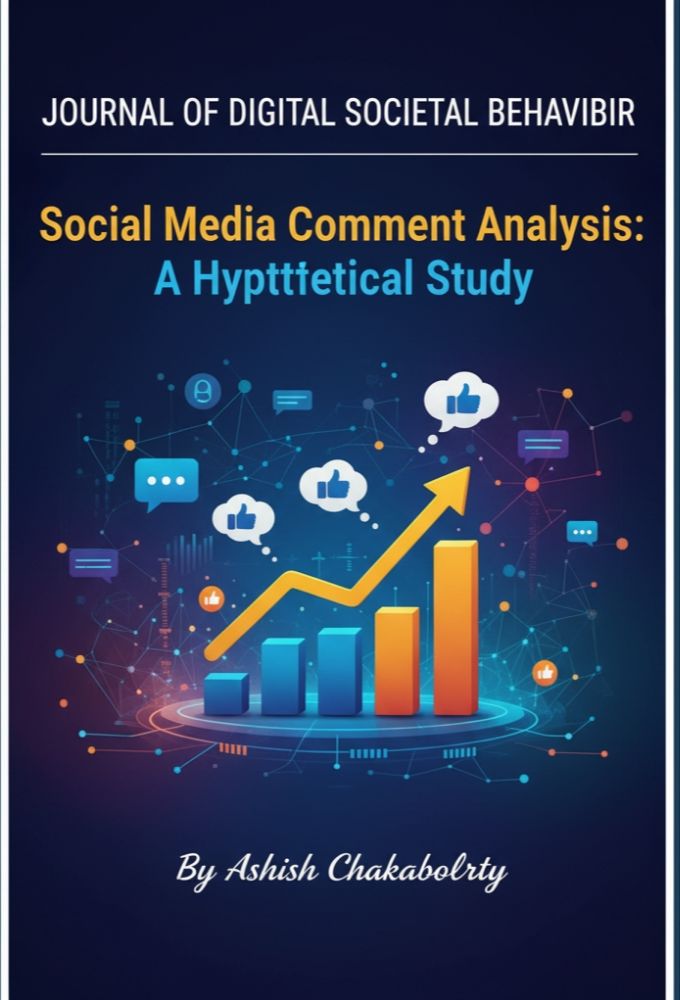
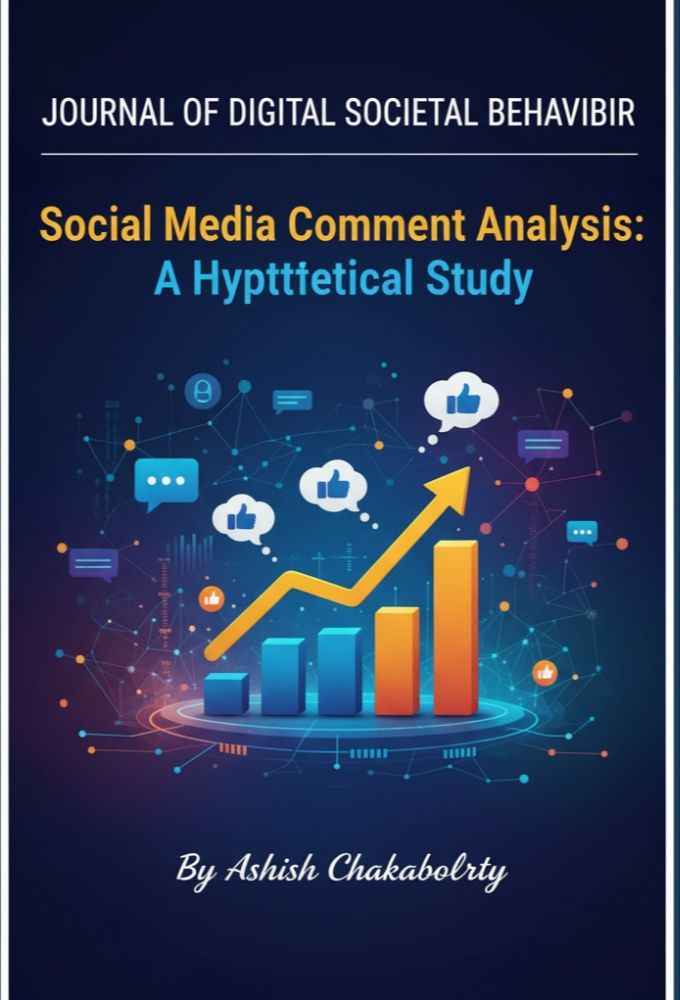
In the contemporary digital era, understanding public opinion requires systematic, replicable, and justifiable methodologies. Social media platforms provide a rich source of secondary data, making it possible to conduct simple hypothetical research using sample studies. This article presents a technical yet accessible research methodology to analyze public sentiment on social media.
Hypothetical Study Topic: Examining public perception of ABC Party vs XYZ Party through social media comments.
1. Research Design This is a descriptive, exploratory study using secondary data sources from social media. The research employs a comment-based sample study, treating social media comments as secondary qualitative data.
Justification: Secondary data analysis reduces time, cost, and effort while still providing authentic insights into public perception.
2. Sample Selection ✓ Collect 80–120 comments from a social media post or article. ✓ Comments may be selected in: Ascending Order: First 80–120 comments (early reactions) Descending Order: Last 80–120 comments (later reactions) ✓ Within these ranges, random sampling can be applied to ensure representativeness.
Justification: A larger sample increases data reliability and accounts for temporal differences in reactions. Ascending/descending selection captures both early and late public sentiment.
3. Data Categorization
Classify comments into the following categories: 1. Support ABC Party
2. Support XYZ Party
3. Neutral/Questions
4. Criticism of both parties
Justification: Clear categorization allows for a combination of qualitative content analysis and quantitative trend assessment, making findings systematic and technically sound.
4. Data Analysis Count the frequency of comments in each category. Identify recurring themes, patterns, and contrasts.
Analyze sentiment direction (positive, negative, neutral).
Hypothetical Findings (from 100 comments):
Support ABC Party: 45 comments – emphasizes recent initiatives.
Support XYZ Party: 30 comments – highlights leadership qualities.
Neutral/Questions: 15 comments – raise queries or show indecision.
Criticism of both parties: 10 comments – points out weaknesses.
5. Interpretation and Conclusion
The majority favors ABC Party’s initiatives, while XYZ Party retains significant leadership support.
Public opinion is diverse but measurable, showing the utility of comment-based analysis.
Justification: Using secondary data from social media allows researchers to perform a reliable, cost-effective, and replicable study, making it ideal for exploratory studies, blogs, or preliminary research in political science and social media analytics.
Ascending/descending comment analysis captures temporal variations in opinions.
Provides quantitative and qualitative insights from a single dataset.
★ Tip for Accuracy: Ensure objective categorization, avoid generalizing from individual outliers, and document the sampling method for transparency.
➤ This simple hypothetical research methodology demonstrates that even secondary social media data can yield systematic, authentic, and justifiable insights, making it accessible for researchers, writers, and bloggers alike
As someone deeply rooted in voluntary social service, I’ve come to believe that the most powerful principle in social work is simple yet transformative:
“Help the people to help themselves.”
My Faith (Image source:Self generate)
I first encountered this principle during my BSW/Master in Social Work studies (2010–2015), and while I may have forgotten much of the academic content, this one idea stayed with me. Over the years, I’ve seen how it works—not just in theory, but in the real world, especially in the grassroots context of Assam.
Why This Principle Matters ?
This principle shifts the focus from charity to empowerment. It doesn’t treat people as passive recipients of aid, but as active participants in their own progress. It respects their dignity, their potential, and their right to shape their future.
In my experience, when communities are given the tools, knowledge, and space to act, they respond with resilience and creativity. Whether it’s environmental awareness, poverty alleviation, or social education—solutions become sustainable only when people own them.
Practical Effectiveness in Grassroots Work
In Assam’s diverse regions, I’ve seen firsthand how this principle translates into action:
Awareness drives that help villagers understand their rights, health, and environment.
Community-led initiatives where local volunteers take charge of sanitation, education, or cultural preservation.
Information sharing that enables people to access government schemes without dependency.
Strategic guidance that helps youth and families solve problems without waiting for external aid.
Often, we assume funding is the key to impact. But I’ve found that strategy, awareness, education, and proper information can solve nearly 60% of social problems—without money. What’s needed is committed human energy, not just financial resources.
My Stand and Invitation
I humbly declare: If ever my voluntary social service becomes entangled with personal economic or political interests, I invite you to openly boycott me and hold me accountable. My commitment to this principle is firm. If I deviate, question me, stop me, and reject me.
Currently, I bear small costs personally, but I do not believe in dependency. I believe in self-dependency and people’s rights. That’s why we are moving forward—without any external fund, but with full faith in voluntary manpower.
We welcome anyone who shares this vision. Even 400 hours a year, from your own place, can make a meaningful contribution.
Let us build a movement where service is not about control, but about liberation. Let us help people help themselves—and in doing so, help society heal itself.
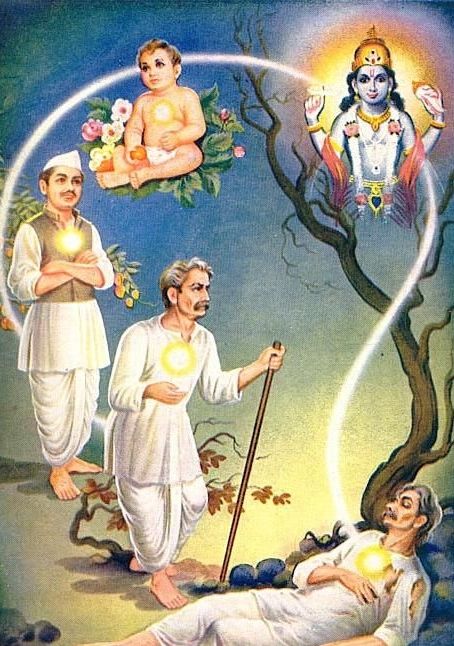
The mystery of birth and rebirth has fascinated humankind for centuries. For some, it is faith. For others, it is an unsolved puzzle. Within Hindu Dharma, rebirth is not just a belief—it is an eternal truth, woven deeply into the philosophy of life, death, and liberation.
Hindu Dharma: The Eternal Truth
The Bhagavad Gita clearly states:
“Just as a person discards worn-out clothes and wears new ones, the soul discards the old body and takes on a new one.” (Gita 2:22)
(Credit to the Real owner of the photo)
Here, Lord Krishna explains that the Atman (soul) is eternal, unchanging, and indestructible. The body is temporary, but the soul journeys forward through countless births until it attains liberation (Moksha). This cycle of Samsara—birth, death, rebirth—is guided by the law of Karma. What we do in this life becomes the seed of the next.
Hindu scriptures like the Upanishads and Puranas echo the same truth: death is not the end, but only a transition, a doorway to another life.
Scientific Enquiry: Phenomenon or Puzzle?
Modern science approaches this subject with caution, but curiosity has led to remarkable findings. ➤ Dr. Ian Stevenson (University of Virginia) investigated more than 2,500 children worldwide who recalled details of previous lives—names, families, deaths—that were later verified. ➤ In India and Sri Lanka, multiple cases documented by researchers showed children identifying villages, relatives, or events from supposed past lives with striking accuracy. ➤ International media like The Hindu, BBC, and The New York Times have reported such cases, often leaving readers questioning the limits of science and memory.
While Hindu Dharma affirms rebirth as cosmic law, science describes it as a phenomenon of consciousness—perhaps memory beyond the brain, or patterns yet to be fully understood.
My Perspective: A Bridge Between Faith and Facts
As a reader of Hindu scriptures and journals, and as a seeker who follows both tradition and contemporary research, I believe rebirth is not merely an imagination. Hindu Dharma reveals it as an eternal truth, validated through the wisdom of the Gita and countless experiences of sages. Science, though hesitant, is gradually uncovering patterns that cannot be dismissed.
Rebirth may never be explained in a laboratory in full, but in the words of the Gita, the soul’s journey is beyond material limits. Science and spirituality need not oppose each other—they may be two paths pointing to the same mysterious reality.
Conclusion
➤ In Hindu Dharma: Rebirth is an eternal law, the unbroken cycle of the soul until liberation. ➤ In Science: Rebirth remains a puzzling phenomenon, with growing evidence but no final explanation.
Perhaps the greatest truth lies in reconciliation: Hinduism provides the spiritual framework, and science offers glimpses that keep our curiosity alive. Life may not end at death—it may simply open into another chapter of an infinite story.
—
Author✒️ – Ashish Chakraborty, MSW, MA (Pol. Sci), Writer, Poet & Poetry, Digital Content Writer




 Ashish Blogger | Writer | Socio-Environmental Volunteer