Category: Article

  • Title: The Genesis and Evolution of Social Audit: A Global and Indian Perspective

    Title: The Genesis and Evolution of Social Audit: A Global and Indian Perspective

    Introduction

    Social Audit is a participatory process that enables citizens to assess and evaluate government programs, policies, and laws. In India, it serves as a vital tool for ensuring transparency, accountability, and public participation in governance.
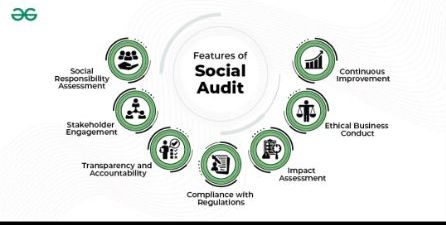
    Image source Google

    Global Origins of Social Audit

    The concept of Social Audit originated in Sweden between 1985 and 1988. Researchers John Fry and Ulla Ressner conducted a comprehensive study of Sweden’s central bureaucracy—the National Labour Market Board (Arbetsförmedlingen). This study involved interviews and questionnaires with over 1,000 employees at various levels, aiming to assess the alignment between work experiences and the organization’s objectives. The findings were published in 1988 under the title “Social Revision av ett Ämbetsverk” and sparked significant debate in the Swedish Parliament .

    Objectives of Social Audit

    The primary objectives of Social Audit include:

    Transparency and Accountability: Ensuring that organizations and governments are open about their activities and are held accountable for their actions.

    Stakeholder Engagement: Involving community members and stakeholders in evaluating and improving organizational performance.

    Ethical Standards: Assessing adherence to ethical practices and social responsibility.

    Performance Improvement: Identifying areas for enhancement in organizational operations and services.

    Social Impact Assessment: Evaluating the social and environmental impacts of organizational activities .

    Social Audit in India

    In India, the concept of Social Audit gained prominence with the enactment of the Mahatma Gandhi National Rural Employment Guarantee Act (MGNREGA) in 2005, which mandated its implementation to monitor wage employment programs. Over time, its scope expanded to include various social sector schemes, promoting inclusive governance.

    Institutional Framework and Public Participation

    The Ministry of Rural Development (MoRD) has established guidelines and rules to facilitate Social Audits under MGNREGA. These include the formation of Social Audit Units (SAUs), capacity-building initiatives, and the development of audit manuals to standardize procedures. The active involvement of Gram Sabhas, where community members collectively assess project implementation, ensures that the voices of marginalized groups are heard, fostering inclusive development .

    Challenges and Way Forward

    Despite its successes, challenges such as low women participation and resistance from local officials persist. Addressing these issues requires continuous advocacy, capacity building, and strengthening of institutional mechanisms to uphold the integrity of Social Audits.

    Conclusion

    Social Audits in India have proven to be an effective mechanism for promoting transparency, accountability, and public participation in governance. By empowering communities to actively engage in the oversight of public programs, Social Audits contribute to the realization of inclusive and sustainable development
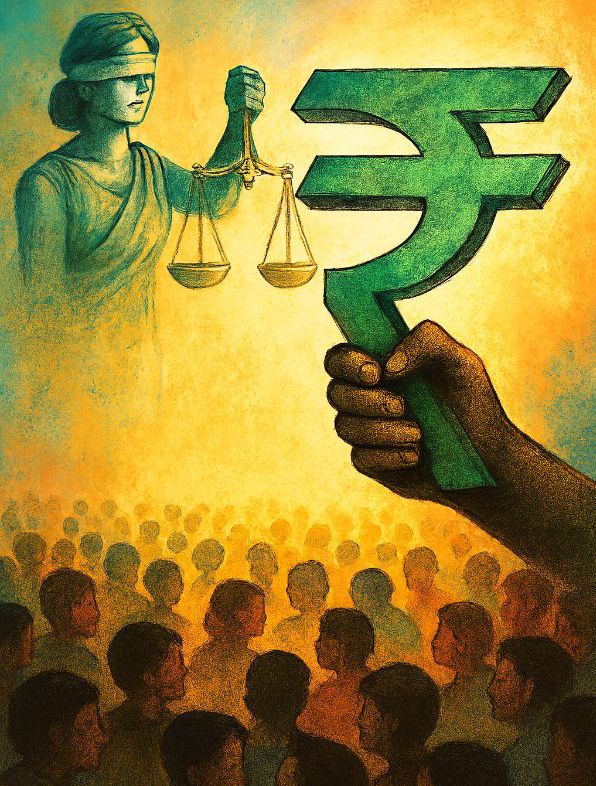
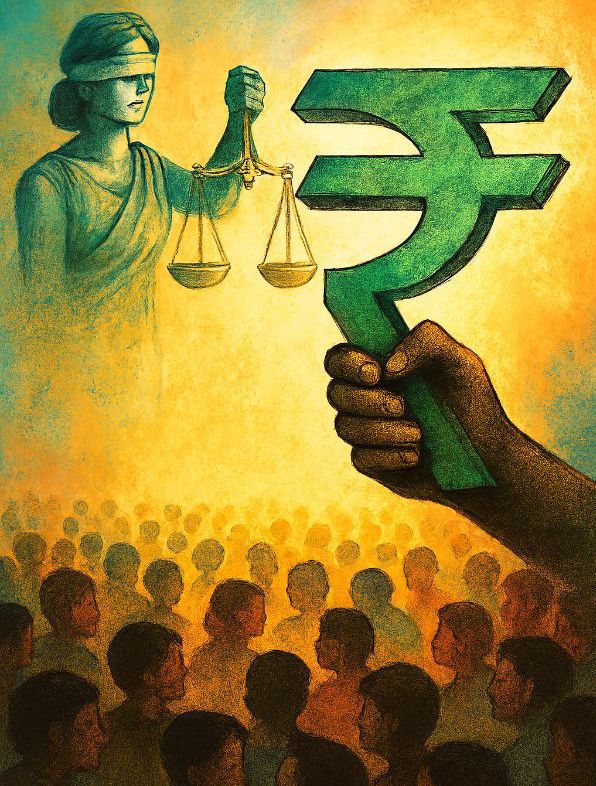
  • জনসংখ্যা ও দুর্নীতি: সংখ্যার ছায়ায় ন্যায়ের সংকট

    জনসংখ্যা ও দুর্নীতি: সংখ্যার ছায়ায় ন্যায়ের সংকট

    Awareness purpose only

    ভূমিকা:
    ভারতবর্ষে জনসংখ্যা ও দুর্নীতি—দুটি শব্দ, দুটি বাস্তবতা, কিন্তু কি এরা একে অপরের পরিপূরক?
    এই প্রশ্নটাই আমাদের ভাবতে বাধ্য করে।
    যেখানে জনসংখ্যা বৃদ্ধি একটি প্রাকৃতিক ও সামাজিক চ্যালেঞ্জ, সেখানে দুর্নীতি একটি নৈতিক ও প্রশাসনিক ব্যর্থতা।
    কিন্তু এই দুটি সমস্যা কি একে অপরকে উৎসাহিত করে?
    এই লেখায় আমরা সেই সম্পর্ক, প্রভাব এবং সম্ভাব্য সমাধান নিয়ে যুক্তিনির্ভর বিশ্লেষণ করব।


    👥 জনসংখ্যা: সংখ্যার শক্তি না দুর্বলতা?

    ভারতের জনসংখ্যা ১৪০ কোটিরও বেশি।
    এই বিপুল সংখ্যক মানুষ যদি শিক্ষিত, সচেতন ও কর্মক্ষম হয়, তাহলে এরা জাতির শক্তি।
    কিন্তু যখন—

    • শিক্ষা সীমিত,
    • স্বাস্থ্যসেবা দুর্বল,
    • কর্মসংস্থান অনিশ্চিত—
      তখন এই সংখ্যা হয়ে ওঠে চাপ, প্রতিযোগিতা, এবং অসন্তোষের উৎস।

    এই পরিস্থিতিতে মানুষ জীবনের মৌলিক চাহিদা পূরণে বাধ্য হয় সংক্ষিপ্ত পথ বেছে নিতে—যা দুর্নীতির দিকে ঠেলে দেয়।


    💰 দুর্নীতি: সুযোগের অভাবে অন্যায়ের পথ

    দুর্নীতি কেবল অর্থের লেনদেন নয়, এটি একটি মনোভাব—যেখানে মানুষ বিশ্বাস করে, “সিস্টেমে কিছুই সম্ভব নয়, যদি না ঘুষ দাও।”
    এই বিশ্বাস জন্ম নেয় যখন—

    • সরকারি পরিষেবা ধীর,
    • বিচারব্যবস্থা জটিল,
    • এবং জনসংখ্যার চাপ প্রশাসনকে দুর্বল করে তোলে।

    অধিক জনসংখ্যা মানে অধিক আবেদন, অধিক দাবি, এবং অধিক অসন্তোষ।
    এই চাপের মধ্যে দুর্নীতি হয়ে ওঠে ‘সমাধানের’ সহজ পথ।


    🔗 সম্পর্ক: জনসংখ্যা কি দুর্নীতিকে বাড়ায়?

    তথ্য ও যুক্তি বলছে—

    • অধিক জনসংখ্যা প্রশাসনিক ব্যবস্থাকে দুর্বল করে।
    • দুর্বল প্রশাসন দুর্নীতিকে উৎসাহ দেয়।
    • দুর্নীতির কারণে সাধারণ মানুষ বঞ্চিত হয়, এবং অসন্তোষ বাড়ে।
    • অসন্তোষ থেকে জন্ম নেয় সামাজিক অস্থিরতা, যা আবার জনসংখ্যা নিয়ন্ত্রণের প্রচেষ্টাকে ব্যাহত করে।

    এটি একটি চক্র, যেখানে জনসংখ্যা ও দুর্নীতি একে অপরকে পুষ্ট করে।


    🧠 সমাধান: যুক্তি, শিক্ষা ও নীতির পুনর্গঠন

    এই সমস্যার সমাধান কোনো একক পদক্ষেপে সম্ভব নয়।
    প্রয়োজন সমন্বিত, যুক্তিনির্ভর ও নৈতিক পদক্ষেপ—

    1. শিক্ষা:
    • জনসংখ্যা নিয়ন্ত্রণ ও দুর্নীতিবিরোধী শিক্ষা পাঠ্যক্রমে অন্তর্ভুক্ত করা
    • নৈতিক শিক্ষা ও নাগরিক অধিকার সম্পর্কে সচেতনতা
    1. প্রযুক্তি ও স্বচ্ছতা:
    • ডিজিটাল প্রশাসন, যাতে ঘুষের সুযোগ কমে
    • তথ্যের সহজপ্রাপ্যতা, যাতে মানুষ জানে তারা কী পাওয়ার অধিকার রাখে
    1. আইন ও শাস্তি:
    • দুর্নীতির বিরুদ্ধে দ্রুত বিচার
    • জনসংখ্যা নিয়ন্ত্রণে উৎসাহমূলক নীতি (যেমন: শিক্ষিত দম্পতির জন্য কর ছাড়)

    উপসংহার:

       বিজনসংখ্যা ও দুর্নীতি—দুটি সমস্যা, কিন্তু একটি জাতির ভবিষ্যতের জন্য একত্রে সবচেয়ে বড় চ্যালেঞ্জ।
    এই চ্যালেঞ্জ মোকাবিলায় আমাদের প্রয়োজন যুক্তি, নৈতিকতা, এবং সাহস।
    যদি আমরা সংখ্যাকে শক্তিতে রূপান্তর করতে পারি, এবং দুর্নীতিকে ন্যায়ের আলোয় পরাজিত করতে পারি—তবে ভারতবর্ষ সত্যিই উন্নত হবে।

    𝓫𝔂 : 𝒜𝓈𝒽𝒾𝓈𝒽 𝒞𝒽𝒶𝓀𝓇𝒶𝓫𝓸𝓇𝓉𝓎 ✍🏾📚⋆。˚.

    writter ✒️ – Ashish Chakraborty, MSW, MA (P Sci) | Blog & Articule Writer• Literary Artist • Digital Content writter

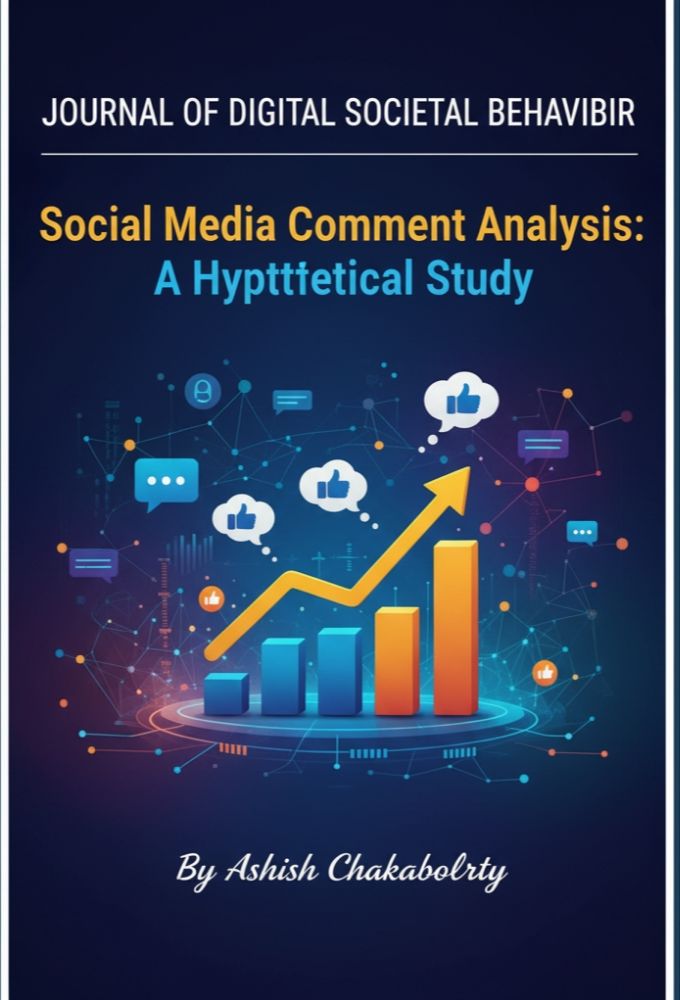
  • “Social Media Comment Analysis: A Hypothetical Study”

    “Social Media Comment Analysis: A Hypothetical Study”


    In the contemporary digital era, understanding public opinion requires systematic, replicable, and justifiable methodologies. Social media platforms provide a rich source of secondary data, making it possible to conduct simple hypothetical research using sample studies. This article presents a technical yet accessible research methodology to analyze public sentiment on social media.


    Hypothetical Study Topic:
    Examining public perception of ABC Party vs XYZ Party through social media comments.

    1. Research Design
    This is a descriptive, exploratory study using secondary data sources from social media. The research employs a comment-based sample study, treating social media comments as secondary qualitative data.

    Justification: Secondary data analysis reduces time, cost, and effort while still providing authentic insights into public perception.

    2. Sample Selection
    ✓ Collect 80–120 comments from a social media post or article.
    ✓ Comments may be selected in:
    Ascending Order: First 80–120 comments (early reactions)
    Descending Order: Last 80–120 comments (later reactions)
    ✓ Within these ranges, random sampling can be applied to ensure representativeness.


    Justification: A larger sample increases data reliability and accounts for temporal differences in reactions. Ascending/descending selection captures both early and late public sentiment.


    3. Data Categorization

    Classify comments into the following categories:
    1. Support ABC Party

    2. Support XYZ Party

    3. Neutral/Questions

    4. Criticism of both parties

    Justification: Clear categorization allows for a combination of qualitative content analysis and quantitative trend assessment, making findings systematic and technically sound.


    4. Data Analysis
    Count the frequency of comments in each category.
    Identify recurring themes, patterns, and contrasts.

    Analyze sentiment direction (positive, negative, neutral).


    Hypothetical Findings (from 100 comments):

    Support ABC Party: 45 comments – emphasizes recent initiatives.

    Support XYZ Party: 30 comments – highlights leadership qualities.

    Neutral/Questions: 15 comments – raise queries or show indecision.

    Criticism of both parties: 10 comments – points out weaknesses.


    5. Interpretation and Conclusion

    The majority favors ABC Party’s initiatives, while XYZ Party retains significant leadership support.

    Public opinion is diverse but measurable, showing the utility of comment-based analysis.


    Justification: Using secondary data from social media allows researchers to perform a reliable, cost-effective, and replicable study, making it ideal for exploratory studies, blogs, or preliminary research in political science and social media analytics.


    6. Technical Strengths of the Method

    Uses secondary data, reducing time and cost.

    Randomized comment selection improves representativeness.

    Ascending/descending comment analysis captures temporal variations in opinions.

    Provides quantitative and qualitative insights from a single dataset.

    ★ Tip for Accuracy: Ensure objective categorization, avoid generalizing from individual outliers, and document the sampling method for transparency.

    This simple hypothetical research methodology demonstrates that even secondary social media data can yield systematic, authentic, and justifiable insights, making it accessible for researchers, writers, and bloggers alike

  • ✶ Help the People to Help Themselves — A Principle That Works on the Ground

    As someone deeply rooted in voluntary social service, I’ve come to believe that the most powerful principle in social work is simple yet transformative:


    “Help the people to help themselves.”

    My Faith (Image source:Self generate)

    I first encountered this principle during my BSW/Master in Social Work studies (2010–2015), and while I may have forgotten much of the academic content, this one idea stayed with me. Over the years, I’ve seen how it works—not just in theory, but in the real world, especially in the grassroots context of Assam.

    Why This Principle Matters ?

    This principle shifts the focus from charity to empowerment. It doesn’t treat people as passive recipients of aid, but as active participants in their own progress. It respects their dignity, their potential, and their right to shape their future.

    In my experience, when communities are given the tools, knowledge, and space to act, they respond with resilience and creativity. Whether it’s environmental awareness, poverty alleviation, or social education—solutions become sustainable only when people own them.

    Practical Effectiveness in Grassroots Work

    In Assam’s diverse regions, I’ve seen firsthand how this principle translates into action:

    • Awareness drives that help villagers understand their rights, health, and environment.
    • Community-led initiatives where local volunteers take charge of sanitation, education, or cultural preservation.
    • Information sharing that enables people to access government schemes without dependency.
    • Strategic guidance that helps youth and families solve problems without waiting for external aid.

    Often, we assume funding is the key to impact. But I’ve found that strategy, awareness, education, and proper information can solve nearly 60% of social problems—without money. What’s needed is committed human energy, not just financial resources.

    My Stand and Invitation

    I humbly declare:
    If ever my voluntary social service becomes entangled with personal economic or political interests, I invite you to openly boycott me and hold me accountable. My commitment to this principle is firm. If I deviate, question me, stop me, and reject me.

    Currently, I bear small costs personally, but I do not believe in dependency. I believe in self-dependency and people’s rights. That’s why we are moving forward—without any external fund, but with full faith in voluntary manpower.

    We welcome anyone who shares this vision. Even 400 hours a year, from your own place, can make a meaningful contribution.

    Let us build a movement where service is not about control, but about liberation.
    Let us help people help themselves—and in doing so, help society heal itself.

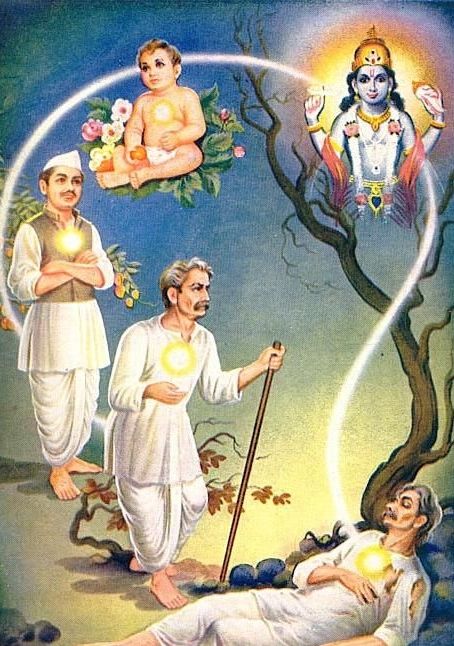
  • Rebirth: An Eternal Truth in Hindu Dharma and a Phenomenon in Science !

    The mystery of birth and rebirth has fascinated humankind for centuries. For some, it is faith. For others, it is an unsolved puzzle. Within Hindu Dharma, rebirth is not just a belief—it is an eternal truth, woven deeply into the philosophy of life, death, and liberation.

    Hindu Dharma: The Eternal Truth

    The Bhagavad Gita clearly states:

    “Just as a person discards worn-out clothes and wears new ones, the soul discards the old body and takes on a new one.” (Gita 2:22)

    (Credit to the Real owner of the photo)

    Here, Lord Krishna explains that the Atman (soul) is eternal, unchanging, and indestructible. The body is temporary, but the soul journeys forward through countless births until it attains liberation (Moksha). This cycle of Samsara—birth, death, rebirth—is guided by the law of Karma. What we do in this life becomes the seed of the next.

    Hindu scriptures like the Upanishads and Puranas echo the same truth: death is not the end, but only a transition, a doorway to another life.

    Scientific Enquiry: Phenomenon or Puzzle?

    Modern science approaches this subject with caution, but curiosity has led to remarkable findings.
    ➤ Dr. Ian Stevenson (University of Virginia) investigated more than 2,500 children worldwide who recalled details of previous lives—names, families, deaths—that were later verified.
    ➤ In India and Sri Lanka, multiple cases documented by researchers showed children identifying villages, relatives, or events from supposed past lives with striking accuracy.
    ➤ International media like The Hindu, BBC, and The New York Times have reported such cases, often leaving readers questioning the limits of science and memory.

    While Hindu Dharma affirms rebirth as cosmic law, science describes it as a phenomenon of consciousness—perhaps memory beyond the brain, or patterns yet to be fully understood.

    My Perspective: A Bridge Between Faith and Facts

    As a reader of Hindu scriptures and journals, and as a seeker who follows both tradition and contemporary research, I believe rebirth is not merely an imagination. Hindu Dharma reveals it as an eternal truth, validated through the wisdom of the Gita and countless experiences of sages. Science, though hesitant, is gradually uncovering patterns that cannot be dismissed.

    Rebirth may never be explained in a laboratory in full, but in the words of the Gita, the soul’s journey is beyond material limits. Science and spirituality need not oppose each other—they may be two paths pointing to the same mysterious reality.

    Conclusion

    ➤ In Hindu Dharma: Rebirth is an eternal law, the unbroken cycle of the soul until liberation.
    ➤ In Science: Rebirth remains a puzzling phenomenon, with growing evidence but no final explanation.

    Perhaps the greatest truth lies in reconciliation: Hinduism provides the spiritual framework, and science offers glimpses that keep our curiosity alive. Life may not end at death—it may simply open into another chapter of an infinite story. 

    Author✒️ – Ashish Chakraborty, MSW, MA (Pol. Sci), Writer, Poet & Poetry, Digital Content Writer

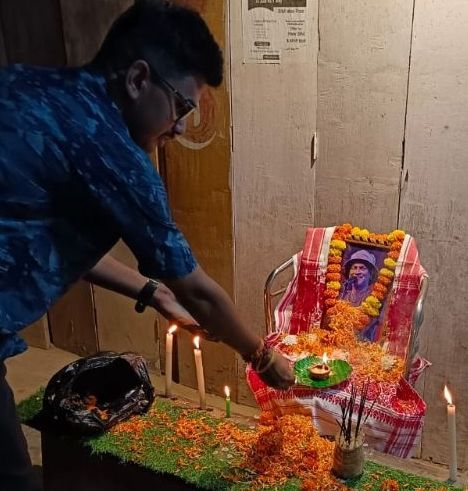
  • “Zubeen Garg: Larger Than Life, Loved Beyond Borders”

    জুবিন দা: A Legend Beyond Recognition, Soul of Assam

    জুবিন গার্গ—আমাদের Juveen Da—শুধু আসামের নয়, West Bengal এবং দেশের অন্যান্য অংশেরও হৃদয়ের প্রিয়। তিনি সত্যিই ভারতের finest artists-এর একজন। 38,000+ songs across 40 languages রেকর্ড করেছেন, যা এক অনন্য অবদান। এমনকি কিছু দিনে তিনি 30–35 songs রেকর্ড করেছেন। তার voice স্পর্শ করেছে Assamese, Bengali, Bollywood, এবং আরও অনেক regional industries।

    Larger Than Life

    জুবিন দার কোনো recognition বা introduction-এর প্রয়োজন ছিল না। তিনি ছিলেন larger than life। Bollywood তাকে শোনে unforgettable tracks যেমন Ya Ali (Gangster) এবং Dil Tu Hi Bata (Krrish 3)-এ। আজও এই গানগুলি প্রতিটি listener-এর মনে বাজে।

    একজন fan হিসেবে—❓How much did Zubeen Da give to Bollywood, and what did Bollywood truly return to him? সত্যি বলতে, তিনি কোনো recognition-এর জন্য অপেক্ষা করেননি—কারণ উনি নিজেই এক Living Industry, larger than life। তারপরও আমার মনে হয়—❓Shouldn’t the Government of India consider him for the Bharat Ratna? এটা আমার personal emotion, তার multidimensional contribution-এর জন্য: music, social service, environmental work, এবং কোটি মানুষের faith ও love।

    Beyond Music: Humanity & Service

    জুবিন দার জীবন ছিল humanity-এর এক জীবন্ত উদাহরণ। তিনি বলেছিলেন, “I have no caste, no religion, I am like Kanchenjunga.” এবং তিনি সেই সত্যকে জীবনে পালন করেছেন। মানসিকভাবে অসুস্থ মানুষ থেকে শুরু করে poorest tea stall worker—সকলেই তাকে দেখেছেন কেবল superstar নয়, বরং একজন kindred soul। তার generosity, voluntary service, এবং মানুষের সাথে genuine connection তাকে সকলের heart-এ এক special place দিয়েছে।

    A Legacy Remembered

    তার প্রিয়তার প্রমাণ দেখা গেছে তার funeral-এ, যেখানে 10 lakh+ people সমবেত হয়েছেন—crying, grieving, yet united in tribute। সেই মুহূর্ত দেখায় যে, তিনি কেবল একজন singer নন, তিনি আসামের soul।

    একজন fan হিসেবে, আমি humble অনুরোধ করি: আমার words বিকৃত করবেন না, কোনো controversy তৈরি করবেন না। এগুলো আমার genuine emotion, যা এখনো শোনায় Zubeen Da-এর voice, অনুভব হয় তার presence, এবং তার spirit বেঁচে আছে প্রতিটি heart-এ।

    Author ✒️ – Ashish Chakraborty, MSW, MA (Political Science) | Writer • Poet • Literary Artist • Digital Content Creator


  • ✦ রাজমিস্ত্রি থেকে চিকিৎসক: শুভমের অদম্য স্বপ্নযাত্রা !

    Ashish Chakraborty
    MSW (Specialization: Human Rights), MA
    Writer | Blogger | Digital Content Writter

    Curtsey to the real owner of image (Kolkata express) of the photo


    ভূমিকা
    স্বপ্ন দেখা সহজ, কিন্তু সেই স্বপ্নকে বাস্তবে রূপ দেওয়া এক কঠিন লড়াই। দারিদ্র্য, অভাব আর সামাজিক বাঁধা প্রায়শই তরুণদের স্বপ্নকে চাপা দেয়। কিন্তু কেউ কেউ আছেন, যারা প্রতিটি শিকল ভেঙে নিজেদের ভাগ্যকে নতুন করে লেখেন। শুভমের গল্প তেমনই এক জীবন্ত উদাহরণ।

    শৈশব ও সংগ্রামের শুরু

    শুভমের পরিবার ছিল দরিদ্র। সংসারের ভরণপোষণের জন্য ছোটবেলাতেই তাকে রাজমিস্ত্রির কাজে নামতে হয়েছিল।
    দিনভর সূর্যের নিচে ইট–বালির ধুলোয় খেটে যাওয়া, আর রাতে ক্ষুধার্ত শরীর নিয়ে পড়াশোনা চালিয়ে যাওয়া—এই ছিল তার জীবন।

    তার চোখে একটাই স্বপ্ন—একদিন চিকিৎসক হবে, মানুষের জীবন বাঁচাবে।

    অধ্যবসায়ের পথে

    ✶ রাতের পর রাত জেগে পড়াশোনা করেছে।
    ✶ দিনে রাজমিস্ত্রির কাজে পরিশ্রম করেছে।
    ✶ প্রতিটি পয়সা জমিয়ে বই কিনেছে।

    অসংখ্যবার হাল ছাড়ার মতো পরিস্থিতি তৈরি হলেও শুভম বিশ্বাস হারায়নি।
    তার মনে গেঁথে ছিল—“দারিদ্র্য আমার জন্মদোষ নয়, কিন্তু স্বপ্ন হার মানালে তা আমার অপরাধ।”

    সাফল্যের দ্বারপ্রান্তে

    আজ শুভম চিকিৎসক হওয়ার দ্বারে।
    রাজমিস্ত্রির হাত, যে হাত একদিন দেয়াল তুলত, আজ সেই হাতই মানুষকে সুস্থ করবে।
    এটা শুধু এক ব্যক্তির সাফল্য নয়—এটা অসংখ্য সাধারণ তরুণের আশা ও বিশ্বাসের প্রতীক।


    অনুপ্রেরণা

    শুভম প্রমাণ করেছে—
    ✦➔ পরিস্থিতি যতই প্রতিকূল হোক না কেন, অধ্যবসায় আর বিশ্বাস থাকলে অসম্ভব বলে কিছু থাকে না।

    এই গল্প প্রত্যেক স্বপ্নবাজ তরুণের জন্য এক প্রেরণা।
    তুমি যে-ই হও, যে অবস্থাতেই থাকো, যদি সত্যিই বিশ্বাস রাখো তবে ভাগ্যকে নতুন করে লেখা যায়।

    উপসংহার

    শুভমের জীবন আমাদের শেখায়—
    ঘাম, শ্রম আর সংকল্পই স্বপ্নকে বাস্তবে রূপ দেয়।
    রাজমিস্ত্রি থেকে চিকিৎসক হওয়ার যাত্রা শুধু তার ব্যক্তিগত বিজয় নয়, সমগ্র সমাজের জন্য এক আলোকবর্তিকা।

    তুমি তোমার স্বপ্ন আঁকড়ে ধরো।
    একদিন তুমিও লিখবে নিজের অদম্য কাহিনি।

    𝒜𝓈𝒽𝒾𝓈𝒽 𝒸𝒽𝒶𝓀𝓇𝒶𝓫𝓸𝓇𝓉𝓎𓃮ᝰ.✍🏻

  • Why Protecting the Environment Is Essential for Human Survival

    Author: Ashish Chakraborty,MSW,(Human Rights),MA, Voluntary social worker,Writter, Digital Content creator

    Introduction

    The environment is the foundation of life. It provides the air we breathe, the water we drink, the food we eat, and the climate we live in. Yet, across the world and in India, environmental degradation is accelerating due to deforestation, pollution, and unsustainable development. Protecting the environment is not just a moral responsibility—it is a practical necessity for human survival, public health, and economic stability.


    Understanding the Ecological System

    An ecological system, or ecosystem, is a network of living organisms—plants, animals, and microorganisms—interacting with their physical surroundings such as soil, water, and air. These systems perform essential functions:

    – Forests absorb carbon dioxide and release oxygen 
    – Wetlands filter water and prevent floods 
    – Oceans regulate global temperatures 
    – Biodiversity supports food production and disease control

    When ecosystems are damaged, these life-supporting functions weaken, leading to serious consequences for both nature and people.


    The Link Between Environment and Human Life

    Human life is deeply connected to the environment. Every basic need—air, water, food, shelter, and health—depends on a stable and clean environment. The following examples show how:

    – Air Quality: Trees and plants absorb pollutants and produce oxygen. Without them, air pollution increases, causing respiratory diseases. 
    – Water Security: Forests and wetlands protect rivers and groundwater. Deforestation leads to water scarcity and contamination. 
    – Food Production: Healthy soil and pollinators like bees are essential for agriculture. Pollution and habitat loss reduce crop yields. 
    – Disease Prevention: Balanced ecosystems control the spread of diseases. When biodiversity is lost, the risk of zoonotic diseases rises. 
    – Livelihoods: Millions of people in India depend on farming, fishing, and forest resources. Environmental damage threatens their income and well-being.

    According to the Ministry of Environment, Forest and Climate Change, over 70% of rural livelihoods in India are directly tied to natural resources. Yet, India loses approximately 1.5 million hectares of forest cover every year, putting both biodiversity and human welfare at risk.


    Consequences of Environmental Neglect

    Ignoring environmental protection leads to multiple negative impacts:

    1. Climate Change: Rising temperatures, unpredictable rainfall, and extreme weather events are becoming more common. The Intergovernmental Panel on Climate Change (IPCC) warns that by 2050, over 40% of Indians may face water stress due to climate disruption.

    2. Air Pollution: India is home to several of the world’s most polluted cities. The World Health Organization estimates that air pollution causes around 7 million deaths globally each year, with India among the worst affected.

    3. Loss of Biodiversity: Over one million species are at risk of extinction worldwide. India’s rich biodiversity, especially in regions like the Western Ghats and Northeast, is under severe threat due to habitat destruction.

    4. Public Health Risks: Environmental degradation increases the spread of diseases, especially those transmitted by insects and animals. It also contributes to malnutrition and mental health issues.

    5. Economic Damage: Natural disasters, crop failures, and health crises caused by environmental neglect lead to financial losses and increased poverty, especially in vulnerable communities.


    Why We Must Act Now

    Protecting the environment is essential for:

    – Sustainable Development: Ensuring that future generations have access to clean air, water, and resources 
    – Disaster Resilience: Natural ecosystems like mangroves and forests act as buffers against floods and storms 
    – Economic Stability: Healthy ecosystems support agriculture, tourism, and fisheries 
    – Social Justice: Environmental degradation affects poor and marginalized communities the most

    Environmental protection is also a constitutional duty under Article 48A of the Indian Constitution, which directs the State to protect and improve the environment. Citizens too have a fundamental duty under Article 51A(g) to safeguard natural resources.


    Steps Toward Environmental Protection

    To protect the environment, we must take collective action at every level:

    – Community Participation: Encourage local monitoring of environmental issues and involve citizens in decision-making 
    – Transparent Governance: Conduct regular audits of pollution control measures and resource use 
    – Policy Reform: Advocate for stronger environmental laws and promote renewable energy 
    – Education and Awareness: Teach environmental values in schools and through public campaigns 
    – Legal Compliance: Ensure that all development projects follow environmental regulations and impact assessments


    Conclusion

    The environment is not separate from human life—it is the very basis of it. Protecting it is not optional; it is urgent and essential. As citizens, administrators, and leaders, we must integrate environmental responsibility into every policy, every project, and every public dialogue. Only then can we build a future that is safe, just, and sustainable for all.

    Let this be a call to action—for informed engagement, ethical governance, and a renewed commitment to ecological justice.

Design a site like this with WordPress.com
Get started