Category: Geo-political Analysis

  • Global Passport Ranking and Its Multidimensional Impact on National Mobility, Economy and Reputation


    Abstract:

    A country’s passport ranking reflects much more than travel freedom. It integrates economic strength, diplomatic networks, security perceptions and global reputation. This article examines what a lower ranking—such as Rank 85 in the Passport Index—signifies from financial, geopolitical, developmental and social perspectives. It also outlines how such rankings influence international mobility, foreign investment flow, and national image. Finally, the study provides policy recommendations for improving a country’s global mobility score.


    Introduction:

    The Passport Index is widely used to evaluate the “global mobility power” of different nations. A passport ranked at 85th position indicates limited access to visa-free or visa-on-arrival destinations. Although this may appear to be a mere travel indicator, in reality it reflects deeper structural issues linked with economic stability, national reputation and international relations. Understanding the multidimensional meaning of such a ranking is essential for policymakers, researchers and global governance institutions.


    Problem Statement:

    What does a low Passport Index ranking actually indicate about a nation’s economic status, security perception, and global reputation?

    Analysis:

    1. Economic and Financial Perspective

    A lower passport rank often correlates with weaker economic performance, low investor confidence, and limited global trade connectivity. Countries at Rank 85 typically experience higher barriers to international business travel, which increases transaction costs and reduces competitiveness. Frequent visa requirements restrict entrepreneurs, students and skilled workers, ultimately affecting remittances, economic mobility and talent exchange.

    2. Global Reputation and Diplomatic Relations

    Passport strength is indirectly a reflection of how the world perceives a country’s governance, stability and diplomatic reliability. A lower ranking suggests limited bilateral partnerships, lower diplomatic influence, and concerns regarding political stability or bureaucratic inefficiencies. Such reputational challenges lead other countries to impose stricter entry regulations on its citizens.

    3. Security, Governance and Migration Risks

    Countries with mid-to-low rankings are often seen as posing higher risks of irregular migration or security concerns. While this perception may not always reflect ground reality, it significantly shapes visa policies. Strong law-and-order systems, transparent governance and effective border control usually help nations achieve higher passport mobility scores.

    4. Socio-developmental Indicators

    Passport power aligns closely with a country’s human development indicators. Nations with strong education systems, high income levels and stable institutions usually enjoy higher rankings. Conversely, Rank 85 reflects developmental challenges that limit both social mobility and international trust.


    Social/Ethical Angle:

    Global mobility inequality is a growing concern. People from lower-ranked passport countries face structural disadvantages that restrict educational opportunities, medical access and cultural exposure. Ethically, this raises questions about fairness and global human rights in relation to freedom of movement.


    What could be done ??

    1. Strengthen bilateral and multilateral diplomatic agreements to increase visa-free access.


    2. Improve national security, immigration management and transparency to gain global trust.


    3. Invest in economic stability, infrastructure, and institutional reforms to enhance international perception.


    4. Promote global cultural relations, student exchange programs and international cooperation.


    Conclusion:

    A passport ranked at 85 signifies more than limited travel freedom—it represents interconnected challenges across economy, diplomacy, security and development. Improving these dimensions collectively can enhance a country’s global mobility and strengthen its international standing.


    Author Note:

    Prepared by: Ashish Chakraborty
    MSW | MA (Double); Digital Content Creator | Author | Social Worker | Environmental Volunteer | Traditional Astrologer & Palmistry Practitioner
  • Title: The Genesis and Evolution of Social Audit: A Global and Indian Perspective

    Title: The Genesis and Evolution of Social Audit: A Global and Indian Perspective

    Introduction

    Social Audit is a participatory process that enables citizens to assess and evaluate government programs, policies, and laws. In India, it serves as a vital tool for ensuring transparency, accountability, and public participation in governance.

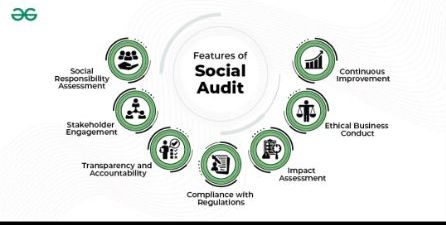
    Image source Google

    Global Origins of Social Audit

    The concept of Social Audit originated in Sweden between 1985 and 1988. Researchers John Fry and Ulla Ressner conducted a comprehensive study of Sweden’s central bureaucracy—the National Labour Market Board (Arbetsförmedlingen). This study involved interviews and questionnaires with over 1,000 employees at various levels, aiming to assess the alignment between work experiences and the organization’s objectives. The findings were published in 1988 under the title “Social Revision av ett Ämbetsverk” and sparked significant debate in the Swedish Parliament .

    Objectives of Social Audit

    The primary objectives of Social Audit include:

    Transparency and Accountability: Ensuring that organizations and governments are open about their activities and are held accountable for their actions.

    Stakeholder Engagement: Involving community members and stakeholders in evaluating and improving organizational performance.

    Ethical Standards: Assessing adherence to ethical practices and social responsibility.

    Performance Improvement: Identifying areas for enhancement in organizational operations and services.

    Social Impact Assessment: Evaluating the social and environmental impacts of organizational activities .

    Social Audit in India

    In India, the concept of Social Audit gained prominence with the enactment of the Mahatma Gandhi National Rural Employment Guarantee Act (MGNREGA) in 2005, which mandated its implementation to monitor wage employment programs. Over time, its scope expanded to include various social sector schemes, promoting inclusive governance.

    Institutional Framework and Public Participation

    The Ministry of Rural Development (MoRD) has established guidelines and rules to facilitate Social Audits under MGNREGA. These include the formation of Social Audit Units (SAUs), capacity-building initiatives, and the development of audit manuals to standardize procedures. The active involvement of Gram Sabhas, where community members collectively assess project implementation, ensures that the voices of marginalized groups are heard, fostering inclusive development .

    Challenges and Way Forward

    Despite its successes, challenges such as low women participation and resistance from local officials persist. Addressing these issues requires continuous advocacy, capacity building, and strengthening of institutional mechanisms to uphold the integrity of Social Audits.

    Conclusion

    Social Audits in India have proven to be an effective mechanism for promoting transparency, accountability, and public participation in governance. By empowering communities to actively engage in the oversight of public programs, Social Audits contribute to the realization of inclusive and sustainable development

  • ✶ Help the People to Help Themselves — A Principle That Works on the Ground

    As someone deeply rooted in voluntary social service, I’ve come to believe that the most powerful principle in social work is simple yet transformative:


    “Help the people to help themselves.”

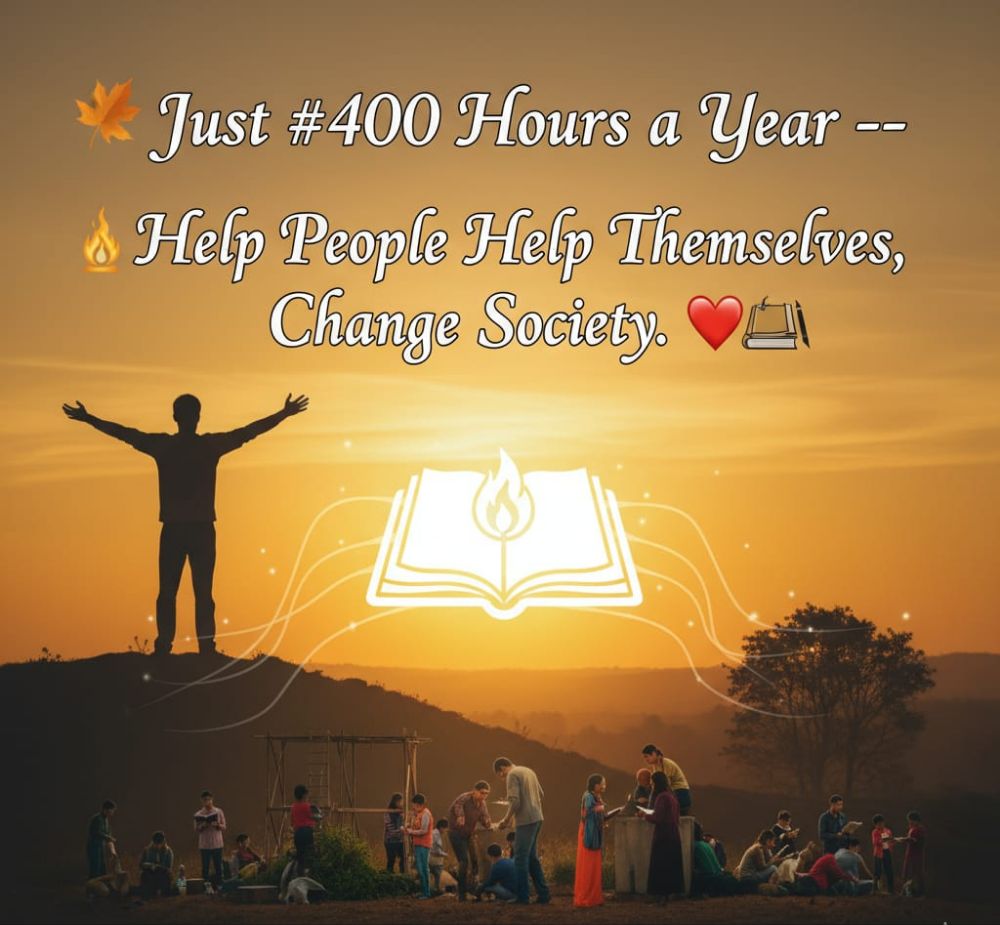
    My Faith (Image source:Self generate)

    I first encountered this principle during my BSW/Master in Social Work studies (2010–2015), and while I may have forgotten much of the academic content, this one idea stayed with me. Over the years, I’ve seen how it works—not just in theory, but in the real world, especially in the grassroots context of Assam.

    Why This Principle Matters ?

    This principle shifts the focus from charity to empowerment. It doesn’t treat people as passive recipients of aid, but as active participants in their own progress. It respects their dignity, their potential, and their right to shape their future.

    In my experience, when communities are given the tools, knowledge, and space to act, they respond with resilience and creativity. Whether it’s environmental awareness, poverty alleviation, or social education—solutions become sustainable only when people own them.

    Practical Effectiveness in Grassroots Work

    In Assam’s diverse regions, I’ve seen firsthand how this principle translates into action:

    • Awareness drives that help villagers understand their rights, health, and environment.
    • Community-led initiatives where local volunteers take charge of sanitation, education, or cultural preservation.
    • Information sharing that enables people to access government schemes without dependency.
    • Strategic guidance that helps youth and families solve problems without waiting for external aid.

    Often, we assume funding is the key to impact. But I’ve found that strategy, awareness, education, and proper information can solve nearly 60% of social problems—without money. What’s needed is committed human energy, not just financial resources.

    My Stand and Invitation

    I humbly declare:
    If ever my voluntary social service becomes entangled with personal economic or political interests, I invite you to openly boycott me and hold me accountable. My commitment to this principle is firm. If I deviate, question me, stop me, and reject me.

    Currently, I bear small costs personally, but I do not believe in dependency. I believe in self-dependency and people’s rights. That’s why we are moving forward—without any external fund, but with full faith in voluntary manpower.

    We welcome anyone who shares this vision. Even 400 hours a year, from your own place, can make a meaningful contribution.

    Let us build a movement where service is not about control, but about liberation.
    Let us help people help themselves—and in doing so, help society heal itself.

Design a site like this with WordPress.com
Get started