Introduction
Social Audit is a participatory process that enables citizens to assess and evaluate government programs, policies, and laws. In India, it serves as a vital tool for ensuring transparency, accountability, and public participation in governance.
Global Origins of Social Audit
The concept of Social Audit originated in Sweden between 1985 and 1988. Researchers John Fry and Ulla Ressner conducted a comprehensive study of Sweden’s central bureaucracy—the National Labour Market Board (Arbetsförmedlingen). This study involved interviews and questionnaires with over 1,000 employees at various levels, aiming to assess the alignment between work experiences and the organization’s objectives. The findings were published in 1988 under the title “Social Revision av ett Ämbetsverk” and sparked significant debate in the Swedish Parliament .
Objectives of Social Audit
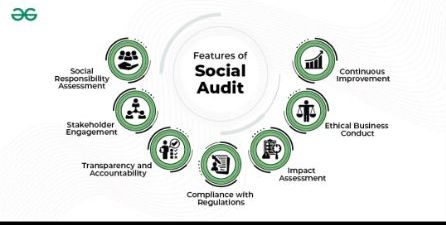
The primary objectives of Social Audit include:
Transparency and Accountability: Ensuring that organizations and governments are open about their activities and are held accountable for their actions.
Stakeholder Engagement: Involving community members and stakeholders in evaluating and improving organizational performance.
Ethical Standards: Assessing adherence to ethical practices and social responsibility.
Performance Improvement: Identifying areas for enhancement in organizational operations and services.
Social Impact Assessment: Evaluating the social and environmental impacts of organizational activities .
Social Audit in India
In India, the concept of Social Audit gained prominence with the enactment of the Mahatma Gandhi National Rural Employment Guarantee Act (MGNREGA) in 2005, which mandated its implementation to monitor wage employment programs. Over time, its scope expanded to include various social sector schemes, promoting inclusive governance.
Institutional Framework and Public Participation
The Ministry of Rural Development (MoRD) has established guidelines and rules to facilitate Social Audits under MGNREGA. These include the formation of Social Audit Units (SAUs), capacity-building initiatives, and the development of audit manuals to standardize procedures. The active involvement of Gram Sabhas, where community members collectively assess project implementation, ensures that the voices of marginalized groups are heard, fostering inclusive development .
Challenges and Way Forward
Despite its successes, challenges such as low women participation and resistance from local officials persist. Addressing these issues requires continuous advocacy, capacity building, and strengthening of institutional mechanisms to uphold the integrity of Social Audits.
Conclusion
Social Audits in India have proven to be an effective mechanism for promoting transparency, accountability, and public participation in governance. By empowering communities to actively engage in the oversight of public programs, Social Audits contribute to the realization of inclusive and sustainable development
 Ashish Blogger | Writer | Socio-Environmental Volunteer
Leave a comment