Title : Mob Lynching, Rumour and the Erosion of Human Rights: A Case from Bangladesh
Abstract
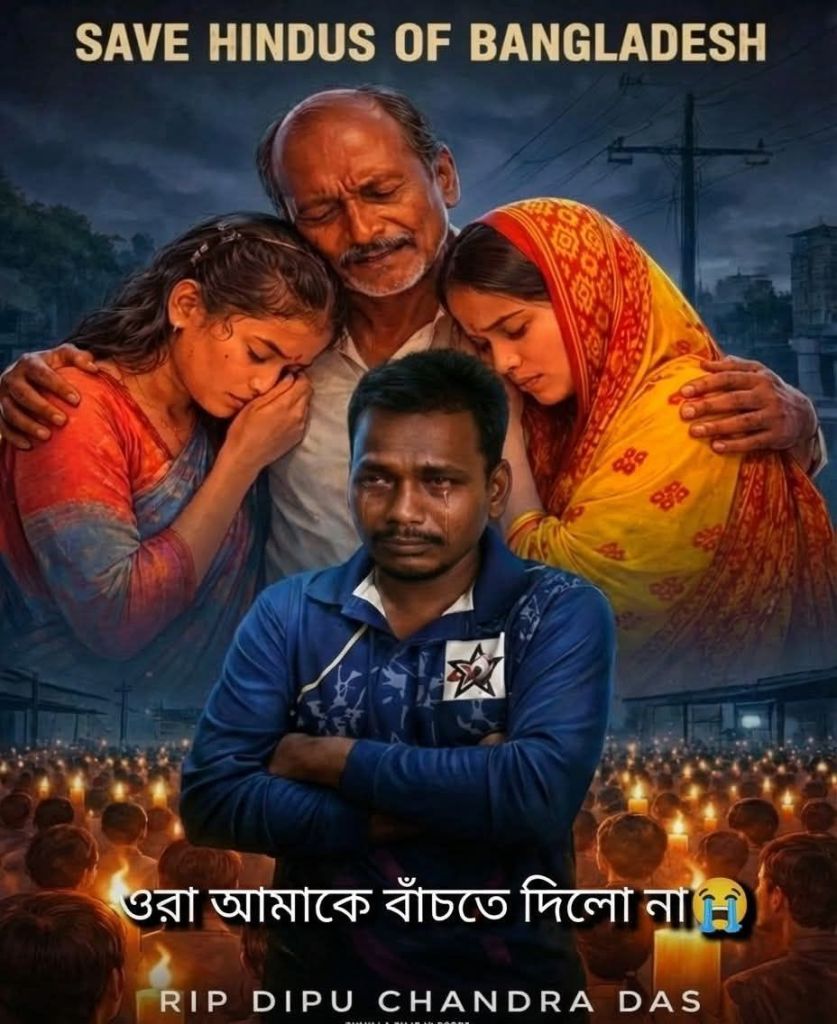
This article examines the killing of a Hindu youth named Dipu Das in Bangladesh following allegations of religious insult. Drawing upon publicly available news reports, articles, blogs and secondary sources, the paper highlights how rumours, half-truths and the absence of due process contributed to a grave violation of human rights. Rather than focusing on the alleged social media post, the article emphasizes the broader issue of mob violence and the systematic denial of the victim’s right to be heard.
Background of the Incident
A few days ago, Dipu Das, a Hindu youth in Bangladesh, was lynched by a mob following accusations of religious blasphemy. Initial news reports claimed that he had posted offensive content on social media. At the same time, contradictory information emerged stating that Dipu did not use an Android smartphone and instead possessed a basic keypad mobile phone. This inconsistency raised serious questions regarding the credibility of the allegations.
Alternative Accounts and Emerging Questions
In an effort to verify facts, various newspapers, blogs, articles and journalistic sources were reviewed. Through this process, an alternative account of events surfaced. According to multiple reports, Dipu worked as a supervisor in a garment factory. One afternoon, while sitting at a tea stall, he overheard a group of people discussing religion, sin and redemption. The discussion suggested that sins could be absolved through prayer on a specific religious day.
Dipu reportedly made a comment stating that seeking forgiveness from God does not require a specific day, and that prayer can be offered at any time, with forgiveness granted by God if He so wills. This remark, particularly the reference to the importance of a “specific day” within the week, is believed to have triggered the initial conflict.
Escalation and Denial of Due Process
After returning to his workplace, Dipu was informed by the factory owner that he had been removed from his job. When he asked for an explanation, he was told to go outside and see for himself. Upon stepping outside, Dipu encountered a large mob approaching him. Within a short period, the situation escalated beyond control, ultimately leading to his death.
At no stage was Dipu given an opportunity to explain his position or defend himself. The entire sequence of events unfolded unilaterally, without any form of dialogue, investigation or legal intervention.
Pattern of Violence and Broader Context
This incident is not an isolated case. Bangladesh has previously witnessed the killing of bloggers, atheists, columnists and ordinary citizens on similar grounds. Such acts of violence, irrespective of religion, caste or specific religious days, form part of a recent yet recurring pattern. A review of available records reveals multiple instances where individuals were targeted and killed based on rumours and unverified allegations.
Human Rights Perspective
The killing of Dipu Das represents a serious violation of fundamental human rights, including the right to life, freedom of expression and the right to due process. The core issue here is not a mobile phone, a social media post or a casual remark. It is the erosion of humanity itself. Mob violence driven by misinformation and intolerance undermines the very foundation of a just society.
No country, regardless of cultural or religious context, should allow such acts against any individual. This incident demands not only condemnation but also reflection, accountability and systemic reform.
Conclusion
The death of Dipu Das stands as a stark reminder of how rumours and half-truths can escalate into irreversible human rights violations. Addressing such violence requires strengthening legal safeguards, promoting tolerance and ensuring that no individual is punished without investigation, evidence and the opportunity to be heard.
Disclaimer
This article is based on publicly available sources and represents an ongoing analysis. Interpretations may evolve as new information emerges.
Ashish Chakraborty MSW,MA
 Ashish Blogger | Writer | Socio-Environmental Volunteer